





🧦 Tips for knitting socks for beginners (and never giving up halfway!)
Knit SisShare
Let's not lie to ourselves: when you start knitting, socks are a little scary. 🤯
Between the heel, the tip, and all those needles that seem to intertwine like a giant game of pick-up sticks, you quickly realize that this project is reserved for professionals.
But good news: with the right advice and a clear step-by-step guide, knitting socks becomes a rewarding project even for beginners . We promise, we've been there (our first socks were two different sizes... thanks Grandma for wearing them anyway 🥲).
In this article, we'll share our tried and tested tips to help you get started stress-free. And spoiler: you'll quickly be hooked!
Why knit your own socks?
▪️ Unparalleled comfort : nothing beats the softness of a hand-knitted pair.
▪️ Total customization : flashy colors, retro stripes, floral jacquard… everything is possible.
▪️ Portable project : ideal for knitting on the train, at the cafe or in front of Netflix.
▪️ Absolute pride : Few things give you the feeling of “leveling up” like a successful first pair.
✨ Remember: Socks are a technical project but accessible if you proceed step by step.
🧶 The basics to know before getting started
1. Choose the right wool and needles
▪️ Recommended yarn : a sock yarn containing a little nylon for strength (often sold as “sock yarn”).
▪️ To begin with, avoid : hairy yarns (mohair, brushed alpaca) which hide your stitches.
▪️ Needles : start with 80 cm circulars for the “magic loop” method or a set of 5 short needles.
👉 Little Knit-sis tip: practice first with a medium weight yarn (worsted type) to really understand the construction... then move on to finer yarns.
2. Understanding the construction of a sock
A sock is always:
1️⃣ The upper (the top of the sock, often with ribbing)
2️⃣ The heel (the dreaded moment… but one we’ll tame 💪)
3️⃣ The foot (knitted in stocking stitch, quite relaxing)
4️⃣ The point (regular decreases, then closing with grafting or “Kitchener stitch”)
📌 Takeaway: Breaking down the project helps reduce stress and makes learning smoother.
🚀 Our best practical tips for getting started
Tip #1 – Start with a simplified version
Before you start with thin socks for ankle boots, test a model with:
▪️ Thicker wool (faster to knit)
▪️ 4 to 5 mm needles
▪️ A simple top-down pattern (from the calf to the toe)
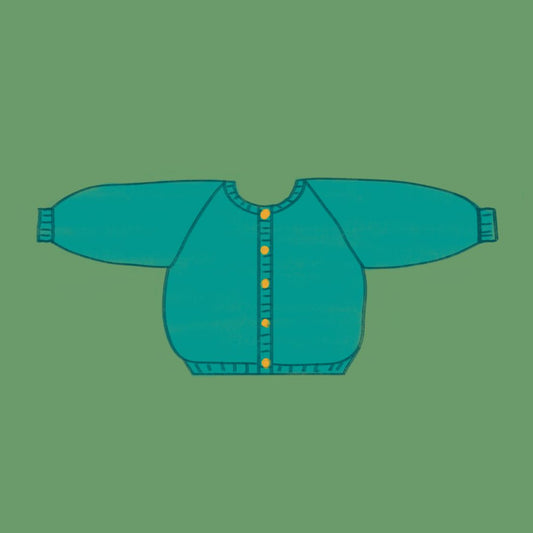
👉 If you like these types of quick and accessible projects, take a look at our free sweater Doudou : perfect for getting started with larger needles.
Tip #2 – Afterthought heel or classic heel?
▪️ Afterthought heel : ideal for beginners because it is added once the sock is almost finished.
▪️ Classic heel (heel flap & gusset): more traditional, but requires following the pattern carefully.
✨ Our advice: try both! The heel after the fact is reassuring to start, then have fun with the classic when you feel ready.
Tip #3 – Knit in parallel
Nothing is more discouraging than having to make a second sock (the famous second sock syndrome 😅).
👉 Solution: Cast on both socks at the same time on a circular needle using the “two at a time” technique.
💡 Bonus: your socks will be perfectly identical!
Tip #4 – Have fun with colors
Knitting should remain a pleasure 🥳
▪️ Try stripes to add rhythm to your knitting (like our sweater Strippie )
▪️ Play with self-striping threads (which create patterns effortlessly).
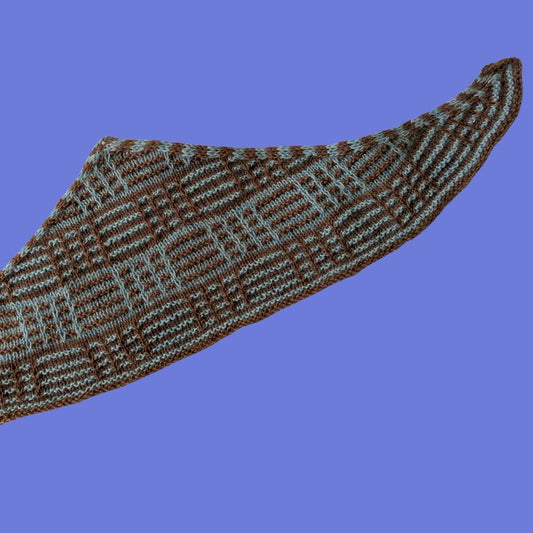
▪️ Or try a small jacquard pattern for fun (inspiration: our cardigan Festi ).
Conclusion
Knitting your first socks can seem intimidating, but with the right yarn, simple construction, and our tips, you'll soon be proud of your warm feet 🧦✨.
If you're looking for a rewarding and colorful first project , explore our collection of beginner patterns .
You will find patterns designed to help you learn gently, as if you were knitting together in the family living room 💕.
And to make sure you don't miss any of our next tips and exclusive patterns:
👉 Subscribe to our newsletter (spoiler: a twisted surprise is coming soon 👀 ).


