






Spring knitting: how to make a light and colorful jacket
Knit SisShare
Spring is coming, nature is returning, and we're all craving a light, colorful piece to slip into when the evenings get a little chilly. At Knit-sis, we dream of a jacket to wear in the garden, over a dress or with jeans—something delicate yet bold, colorful without being heavy.
In this article, I'll guide you step-by-step through designing (or choosing) a knitted spring jacket : from the ideal yarn to possible styles, including mistakes to avoid and Knit-sis pattern ideas to adapt. By the end, you'll be able to confidently embark on your spring project.
Shall we go? ☀️
Why knit a spring jacket?
Short answer : A knitted spring jacket is a lightweight, breathable piece, perfect for the transitional seasons: it provides a subtle layer of warmth while allowing for layering. It's the balance between "neither a coat nor a simple cardigan".
Benefits
▪️ Versatility : you can wear it to the office, on a walk or over a summer top.
▪️ Intermediate between coarse and fine : you can use medium yarns (light cottons, linen, fine merino).
▪️ Creative gratification : a jacket represents a “beautiful object” which motivates you to finish.
▪️ Learning opportunity : this is a good intermediate level project to progress (armholes, sleeves, borders).
Spring/summer pattern shops are offering lightweight jackets and vests in light cotton for this season.
1 | Choosing the right yarn for spring
Recommended fibers
▪️ Cotton (organic or non-mercerized) : cool, breathable, pleasant for mid-seasons.
▪️ Linen / hemp : “textured” fibers, which become softer when washed.
▪️ Fine or fingering merino : for sweaters or jackets where you want a little warmth without extra weight.
▪️ Lightweight blends : cotton + silk, linen + viscose, to give fluidity.
Weight/thread gauge for a lightweight jacket
Ideally, DK to sport/fingering yarns — neither too thick nor too thin — to maintain good support without excess weight.
Colors & Fashion Effect
Spring calls for color. Opt for
▪️ Pastel shades (mint, lavender, peach)
▪️ soft contrasts (colored bands)
▪️ Hand-dyed or tone-on-tone yarns to add an “artisanal” touch
2 | Pattern or construction: which type to choose for your jacket?
Suitable models for spring
Here are some jacket/vest styles that work particularly well:
▪️ Open vest without buttons: easy to wear
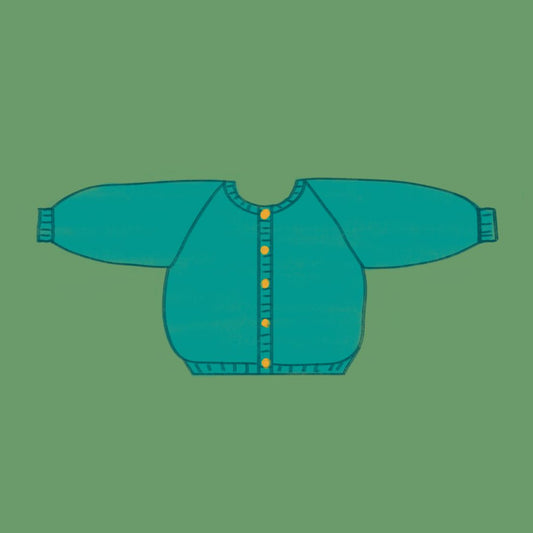
▪️ Lightweight, top-down raglan jacket
▪️ Short jacket (bolero) — for a more minimalist effect
▪️ Sleeveless jacket (long vest type) for layering
Discover Knit-sis patterns (perfect for spring)
Here are three Knit-sis patterns that you can adapt or use as inspiration:
▪️ Cardichou (The Cabbage Vest) — this top-down raglan construction is simple and effective for starting a lightweight jacket. → See the boss
▪️ Festi — an easy circular vest, perfect for "mid-season jacket" versions. → See the boss
▪️ Marguerite — the romantic openwork pattern is ideal for creating a lightweight, breathable jacket. → See the boss
👉 For example, you can take the structure of Cardichou and incorporate “openwork markers” inspired by Marguerite for an original jacket.
3 | Steps to knit your light and colorful jacket
Plan the project
▪️ Choose your size and comfort
▪️ Make a swatch to check the tension (stitch/rows)
▪️ Calculate the amount of yarn (add at least 10% margin)
▪️ Have alternative needles (thinner/thicker) on hand for adjustment
Step-by-step construction
1️⃣ Cast on the stitches
Depending on the design, it may start with an edge or a ribbed strip.
2️⃣ Knit the body
In jersey, or with openwork patterns, colored lines, stripes…
3️⃣ Decreases / armholes
Pay attention to the transitions between sleeves, and make sure to stay symmetrical.
4️⃣ Sleeves
Knit according to whether you want long, 3/4, or short sleeves.
5️⃣ Borders / Finishing Touches
Ribbing, raised stitches, rolled edges or contrasting bands.
6️⃣ Block the jacket
This is crucial for it to take its final form.
“Colors & Stripes” Tips
▪️ Remember to manage yarn changes smoothly (avoid making them in the middle of a row if possible)
▪️ Use markers to locate the color guides
▪️ Alternate thin stripes of contrasting color to add dynamism to the jacket
4 | Common mistakes to avoid
▪️ Not making a sample → risk of the jacket being too big or too small
▪️ Using yarn that's too thick → jacket too heavy
▪️ Change thread mid-row → visible tension line
▪️ Omitting the blocking step → loss of shape and fit
▪️ Not checking the amount of thread → stopped in the middle
▪️ Mismatch in color patterns → visual imbalance
Conclusion
Knitting a spring jacket gives you the freedom to create a piece that reflects your personality: light, colorful, and worn with pride. It's not necessarily a simple project—but with good yarn, a clear pattern (like Cardichou , Festi , or Marguerite ), and a little planning, you can do it.
👉 Explore our Knit-sis pattern collection to find the model that inspires you
👉 Subscribe to our newsletter to receive upcoming seasonal guides + promo codes


