






Knitting without getting tired: ergonomics and pain prevention 🎯
Knit SisShare
Hi! We're Lenny & Louise, the two passionate sisters behind Knit-Sis, and today we're sharing a sweet secret with you: "knitting without getting tired." Because we love our needles (and you do too! 🧶), but that pleasure can quickly be marred by aching wrists, a stiff neck, or a hunched back after an intense session. When we learned to knit with our grandmother and aunt, we didn't think about posture… until the day our cousin joined us for a project (hello, Cardichou cardigan!) and had to stop because of pain. So we put our needles on pause, grabbed a cushion, a lamp, and a blowtorch (well, not the blowtorch 😊) to analyze: how to prolong the joy of knitting without the downside?
In this article we will:
▪️ Explore why you might get tired or hurt while knitting.
▪️ Discover ergonomic techniques to prevent tension.
▪️ We offer simple exercises & active breaks that are easy to integrate.
▪️ Showing you how to adapt your patterns (yes, even your next Strippie Sweater !) for the longevity of your sessions.
And of course, we invite you to then explore our cheerful, accessible and modern patterns — because knitting is also about pleasure, and we want you to enjoy it without constraints!
Why do we get tired (or hurt ourselves) when knitting?
Understanding the sources of fatigue & pain
When you knit, everything seems soft and relaxing… until your hand cramps, your wrist pulls, or your neck feels hot. Here's what happens:
▪️ Repetitive movements: as several "avoid pain" guides point out, it is repetitive movements that cause tension — wrists, forearms, elbows
▪️ Poor sitting posture: hunched back, raised shoulders, neck bent towards the work: all of this increases muscle strain
▪️ Poorly suited equipment: long needles, heavy project, poor lighting = a good combination for rapid fatigue
▪️ Lack of breaks and movement: you can stay "in the bubble" of knitting for 2-3 hours at a time... except that the body needs to breathe, move, and relax.
Key points to remember
If your hands, wrists, shoulders, or neck start aching after 30-45 minutes of knitting, it's a sign: your posture or pace needs adjusting.
Some signs to take seriously
▪️ Numbness or tingling sensation in the wrist or hand
▪️ Stiffness in the neck or shoulders after the session (and which does not go away quickly)
▪️ “Tired” wrist or arm that struggles to keep up.
▪️ A book that is kept away from oneself or under a cushion, a sign that the shoulders or arms no longer want to "carry".
If you feel any of these signs, take a breath, then adjust before continuing. The pleasure of knitting should never come with pain.
4 keys to knitting without getting tired
1. Adopt an ergonomic posture
A memory from our aunt: she always emphasized "keep your shoulders down." As we've seen, good posture makes all the difference . Here are our guidelines:
▪️ Sit up straight, with your pelvis firmly supported. A small cushion behind your lower back = gold
▪️ Shoulders relaxed, elbows close to the body, forearms supported (on table, armrests or cushions).
▪️ Head slightly inclined towards the work, but not "towards the ground".
▪️ Feet firmly planted, knees ideally at a height slightly lower than or equal to hip height
▪️ Clear, glare-free lighting to avoid neck strain or having to tilt your head to see better
Our anecdote: “the family knitted cushion”
At home, we had a special knitting cushion that our grandmother used. She would slip it under her work during long winter evenings, and we were inspired by it for our "Strippie Sweater" and "Daisy Vest" sessions. The result: your arms aren't raised as much, and your knitting rests better. Try it!
2. Take active and strategic breaks
Even knitting loves micro-breaks. It's proven: lifting the needle, switching to another activity, breathing... it reduces muscle fatigue.
▪️ Every 20-30 minutes: stop, extend your fingers, rinse your eyes, stretch your neck.
▪️ Remember to set a timer or an alert on your phone so you don't "forget".
▪️ Vary your movements: change your project, type of yarn, or needles. This reduces mechanical repetition.
Mini break routine (to be integrated)
-
Release your hands, open your fingers wide, then make a fist 5 times.
-
Gently rotate your wrists 10 times in each direction.
-
Stand up, walk around a bit, do some high knees or stretch your arms towards the ceiling.
-
Come back, gently shake your hands, and resume.
Key takeaway: "Breaks are not a waste of time. They are investments in sustainable and pain-free knitting."
3. Equip yourself intelligently
The right equipment is part of the fun — but also of well-being. Here are our recommendations for "knitting without getting tired".
▪️ Circular needles: they distribute the weight better, preventing you from "lifting" the entire project
▪️ Knitting support (cushion, armrest, tray) to rest the work on and relieve the arms.
▪️ Good lighting: neither too dim nor too harsh. Opt for a soft LED lamp.
▪️ Ergonomic seating: armchair or chair with good support, possibly slightly elevating the feet
▪️ Vary the materials & sizes: thick, heavy yarns or fine needles require more effort — alternating with a lighter project can help
Our "sisters" tip:
When you start a project like the Festi Vest or the Splashie Sweater (beautiful, modern, cheerful!), you think: "Okay, I'm setting up my knitting corner like you'd prepare for a cozy moment." A cup of tea, a cushion, some light, and voilà! The pleasure begins.
4. Choose your projects consciously
Even if we love to knit "quickly," just to see the project progress... our body prefers gentle regularity.
▪️ If you feel your wrists or shoulders getting tired: reduce the pace or alternate with a simpler model.
▪️ For a new project: for example, a pattern like the Marguerite Vest (openwork), or the Câlin Sleeveless Sweater (simple and quick) can be "comfortable" options.
▪️ Before tackling a large yarn or heavy project, try a "mini-project" to get your arms and wrists used to it.
▪️ Listen to your body: pleasure also comes from the freedom to choose a project that respects your rhythm.
Key points to remember
Knitting without fatigue is also a state of mind: kindness towards oneself, pleasure in the gesture and respect for one's limits.
Discover our models
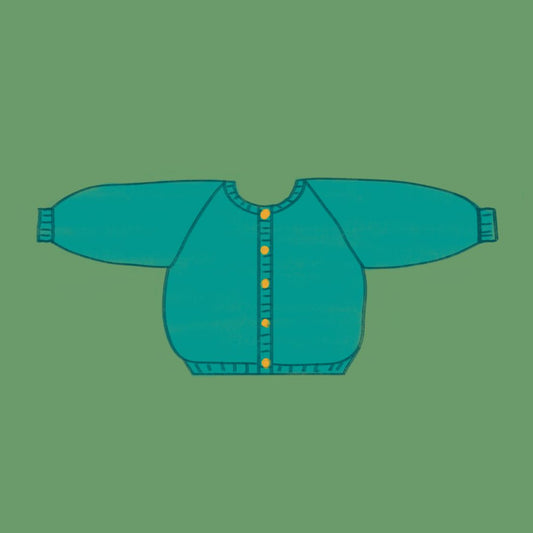
▪️ Discover our ultra-accessible Cardichou (The Chou Vest) (raglan top-down) pattern — perfect for testing a serene knitting session.
▪️ Take a look at the Festi Vest — modern, round, and designed for comfort.
▪️ Do you like light lace? Check out the Aude Vest — elegant, feminine, and soft.
Conclusion
Thank you for knitting this little moment of sharing with us! In summary:
▪️ Yes, you can knit without wearing yourself out : posture, breaks, suitable equipment and thoughtful choices make all the difference.
▪️ Yes, the pleasure of knitting is compatible with bodily comfort : no need to suffer to create.
▪️ And yes, we, Lenny & Louise, are by your side : because at Knit-Sis, passion is shared… and so are smiles.
👉 If you are ready to knit longer, with more pleasure and without pain, click here to discover our Cardichou pattern — and treat yourself to this serene knitting moment.
👉 Want even more knitting wellness tips? Subscribe to our newsletter
👉 Explore all our cheerful and accessible patterns here: [see the complete Knit-Sis collection]
We can't wait to see you set up your cozy knitting corner, needles in hand, smile on your face. Enjoy your session, create something wonderful… and above all: happy knitting without the fatigue!
With all our love 🧶
Lenny & Louise — Knit-Sis


