






How to fix a knit that's too loose or too tight: a complete guide
Knit SisShare
You love knitting, but… you often end up with a project that's either too loose or too tight : a puckered stitch, a pulled edge, or a sweater that fits oddly. We're Lenny & Louise (yes, the two sisters behind Knit-sis!), and we've been knitting with our grandmother and aunt our whole lives. We've seen every kind of tension problem, and here's our complete guide to mastering your knitting, achieving even stitches, a well-fitting garment, and above all, the joy of every row. 😊
You will understand why the tension deteriorates, how to correct it, when to adjust it… and get off to a good start for your next projects (like our soft Cardichou vest (The Chou Vest ) or the fun Splashie sweater).
🎯 Goal : that you stop thinking "darn, I have to start all over again", and that you can move forward serenely.
Why knitting tension changes (and why it matters)
Tension, size and rendering: what it changes
▪️ When a knit is too tight , your fabric is stiff, not very stretchy, not very fluid.
▪️ When a knit is too loose , the stitches have too much space between them: the garment can "stretch", hang badly, lose its shape.
▪️ Tension directly affects: the number of stitches per 10 cm (the "gauge"), the drape of the garment, yarn consumption, and edge stability
Important note : If your stitch does not correspond to the one indicated in the pattern, the final size, appearance and comfort may be compromised.
What are the causes of a voltage mismatch?
▪️ Needle selection: a larger needle = larger stitches (looser fabric). A smaller needle = tighter stitches
▪️ The thread and its nature (thickness, composition): if you use a thinner or thicker thread than recommended, the tension will vary
▪️ Your way of holding the yarn, of knitting (English/Continental style), of "pulling" the yarn or not. A new knitter often pulls too hard or leaves too much slack
▪️ The type of needles: metal, wooden, or bamboo needles sometimes give different results: different glide, different feel
▪️ The project itself: some stitches, patterns (cables, jacquard) require more regular tension, otherwise the pattern “falls away”.
▪️ Blockage: sometimes after blockage the tension changes again, and what we thought was good before is no longer good after washing or blockage
How to fix knitting that's too tight or too loose
Identify: Is your knitting too tight or too loose?
Here's a quick test:
▪️ If the fabric is very dense and brittle, and you have difficulty passing the needle through the stitches => too tight
▪️ If the fabric is airy, “empty”, stretches easily, or the edges widen => too loose .
▪️ Compare your swatch to the number of stitches and rows given in the pattern: if the difference is too great, an adjustment is needed.
Corrections for a knit that's too tight
If you find that your stitches are too tight:
▪️ Increase the size of the needles : choose 0.5 mm to 1 mm larger depending on the gap.
▪️ Use less slippery needles (e.g., wooden or bamboo) if your yarn is sticky and you pull a lot to advance the stitch.
▪️ Loosen your hands : relax your grip, breathe, knit lightly for 10 minutes to get your hands used to not "straining". As we used to say: "Relax, it's just knitting, not a workout!"
▪️ Control your yarn: make sure you do not unconsciously “pinch” the yarn while guiding it, this tightens the stitch.
▪️ After making the change, create another sample with the new settings before continuing with the real project.
Key takeaway : Aggressively changing needles is not a miracle solution if the yarn, grip or knitting style remains the same.
Corrections for a loose knit
If the stitches are too loose:
▪️ Decrease the size of the needles : take 0.5 mm to 1 mm smaller to “pull” the stitches a little upwards.
▪️ Check that you are not leaving too much loose yarn between the stitches or that you are not “throwing” the yarn too far away: try to guide the yarn closer to the needle, with control.
▪️ Use a less slippery yarn or a slightly grippier needle, so that the stitches are less likely to “stretch”.
▪️ Remember to make a sample and block it if necessary to see the final result before continuing.
Key takeaway : Loose knitting quickly becomes a chore: shapes shift, patterns get lost. It's best to correct it early.
Immediate application + “Knit-sis” tips
Our quick mini-checklist
1️⃣ Always make a sample (10×10 cm or according to the pattern) before starting.
2️⃣ Compare with the number of stitches/rows indicated.
3️⃣ If there is a discrepancy: change the needle size, adjust the thread grip, or change the thread.
4️⃣ Knit 20-30 test rows, then block it or stretch it slightly to “see”.
5️⃣ Note your settings: yarn + needles + knitting style = your "signature" tension. You will use this for your next projects.
Real-life tips from Lenny & Louise
▪️ When we were teenagers with our aunt, I (Louise) knitted tightly because I pressed the stitches together “just in case they came undone.” The result? A cardigan that fell short! She told me: “Breathe, let go, your knitting needs to breathe too.”
▪️ Lenny, on the other hand, had a tendency to leave too much yarn loose between the stitches… until the day she fiddled with a Fair Isle pattern and everything was stretched out. Since then, we've established this rule at Knit-sis: as soon as the pattern “breathes,” it's good.
▪️ We always recommend noting the settings used for each pattern: needles, thread, final tension. This avoids unpleasant surprises.
Concrete examples with our Knit-sis patterns
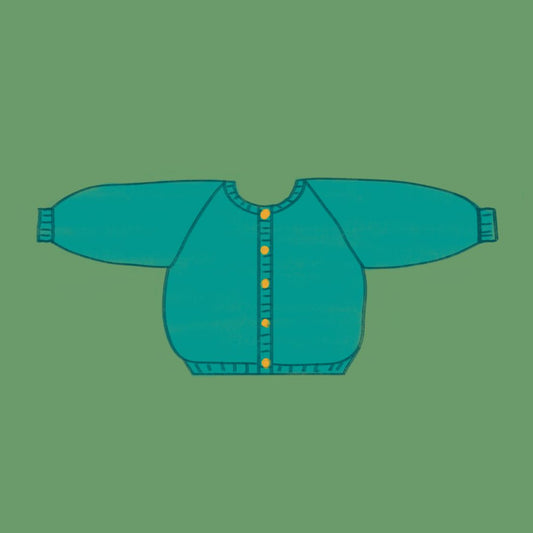
▪️ For the Cardichou cardigan (The Cabbage Cardigan) (top-down raglan, soft): we recommend a "comfortable" tension to maintain the soft effect. If you knit too tightly, the raglan will "close" too much.
▪️ For the Splashie sweater (fun intarsia): the correct tension is essential for the colors to adhere properly, without distortion. Knitting that is too loose will cause the patterns to "puffy".
▪️ For a beginner-friendly pattern, like Câlin (sleeveless sweater): if the tension is too loose, you'll lose the desired fluid drape. Remember to make a swatch!
👉 If you ever notice unexpected tension on one of our patterns, don't hesitate to get back to us: we have already helped several knitters adjust their settings.
Frequently Asked Questions & Quick Answers
“Can I adjust the tension while knitting?”
Yes… but with caution. If you've knitted several patterns or rows and the tension is significantly off, it's often quicker to unravel those few rows and start again with the correct settings. Incorrect tension would "contaminate" the entire project.
“My thread is identical to the pattern, but my tension is different?”
Yes, that's common. Because your knitting style, your needles, your yarn grip will differ from the pattern designer's. It needs to be adapted for you . As they say: the pattern is a guide, you remain the creator.
“Do I always have to knit at the exact tension indicated in the pattern?”
If the pattern specifies a precise tension (stitch/row), then yes , to ensure the final size is accurate. Otherwise, you can adjust it for a different effect (for example, looser, tighter) but be aware of the implications.
“And the blockage? What difference does it make?”
Blocking can change the tension (slightly stretching the fabric, softening it, adjusting it). Therefore, it's ideal to make a swatch and block it under the project conditions to see the actual effect.
Conclusion
In short, knitting with the right tension is a true pleasure: the yarn glides smoothly, the stitches lie flat, and the garment drapes exactly as you envisioned. At Knit-sis, we believe knitting should be accessible, joyful, and rewarding , even for beginners. You now have everything you need to correct knitting that's too loose or too tight: understand why, how to fix it, and how to take action.
👉 Take action now : before your next project (think, for example, of our soft Cardichou cardigan ), take 10 minutes to make your swatch, adjust your tension, and note your settings. You'll gain peace of mind and enjoyment.
Or discover the rest of our knitting patterns
📣 And if you haven't already, sign up for our newsletter to receive more practical guides, exclusive tips and colorful patterns:
[Knit-sis Newsletter Subscription]
✨ See you soon, and happy knitting! ✨


