





Knitting with mixed yarns: what are the best combinations?
Knit SisShare
Do you love knitting and have a few skeins of different fibers in your stash? ✨ Are you wondering how to combine them without any surprises (uneven stitches, a loose finish, "dead weight")? You've come to the right place! We, Lenny & Louise (the two sisters behind Knit-sis), learned to knit with our grandmother and aunt, mixing heritage and modern yarns. We're sharing everything we've learned to help you understand and succeed at knitting with blended yarns .
👉 Looking for a fun project? Check out our accessible pattern too Soft toy (free) — perfect for testing your yarn blends without pressure.
1. Why mix threads? (and when it's a good idea)
Good patterns for mixing yarns
Mixing yarns (fiber, weight, texture) can provide:
▪️ a unique , richer texture
▪️ a clever way to use up leftover yarn or to start a “stash busting” project
▪️ A balance between "beauty" and "utility" (e.g., a natural fiber + an easy-care fiber): useful for everyday knitting
The signals “Yes, we can mix” vs “Caution”
Yes, if:
the yarns have a weight (gauge) close enough or you are ready to make a sample.
You like to experiment and accept a “surprise effect” (in a good way).
Caution if:
▪️ The threads have completely opposite washing instructions (e.g., hand wash vs. machine wash)
▪️ The fibers have extremely incompatible characteristics (e.g., very heavy vs. very light) without adjustment.
📝 Key takeaway: Mixing yarns is a great way to create an original knit — but it requires preparation.
2. The best yarn combinations: a practical guide
Fiber and texture combinations that work well
Here are our “winning pairs” tested by Knit-sis:
▪️ Main yarn: merino wool (or wool-silk blend) + “halo” yarn (mohair, kid mohair) → for a romantic, light, voluminous effect.
▪️ Different weight yarns : for example: a DK yarn + a finer fingering yarn to obtain a more “floating” texture
▪️ Natural fiber + synthetic : to combine softness or warmth + ease of care (e.g., wool + acrylic)
Combinations to avoid or prepare with care
▪️ Mixing a very heavy (bulky) yarn with an ultra-fine yarn without adjusting the sample can give an “unbalanced” result.
▪️ Mixing two yarns that react very differently to washing (e.g., non-superwash wool + machine-washable acrylic) = risk of shrinkage or distortion
▪️ Let's blend fibers, but let's keep an eye on durability: some blends can pill or lose their shape
🧶 Key takeaway: A good combination = same apparent weight + compatible fibers + verified sample.
3. How to successfully complete a knitting project with mixed yarns
Clear steps to avoid unpleasant surprises
1️⃣ Make a swatch — absolutely. Test the combination of yarn A and yarn B at your chosen stitch. This will tell you about the finished look, durability, and needle selection.
2️⃣ Check your gauge : if elasticity or density differs, adjust needles or number of stitches.
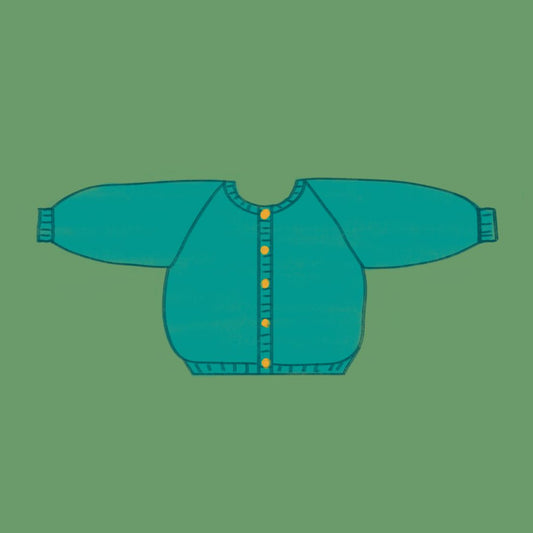
3️⃣ Choose a suitable pattern — for beginners, we recommend a simple design without too many structural changes. Example: Cardichou (The Cabbage Vest) (raglan, top-down) or even Câlin (simple sleeveless sweater).
4️⃣ Knit a few test rows – or even a longer strip, to see how the material behaves (pilling, durability, color contrast).
5️⃣ Follow the washing instructions for the most “fragile” yarn — it is often the one that dictates the rules.
6️⃣ Make modifications as needed : for example, adjust the body length or sleeve width, without altering the main techniques. Example of an advanced project: Marguerite (romantic openwork stitch) — here we can consider a mixture of light yarn + halo yarn.
Pro tips to make it "go smoothly"
▪️ Always use the most “constraining” thread (e.g., washing, drying) as a reference.
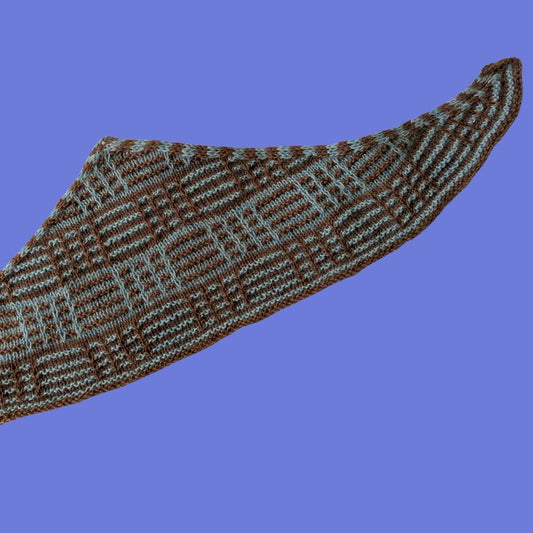
▪️ When mixing different weights, adjust slightly or choose to alternate rows (e.g., 2 rows with yarn A, 2 rows with yarn B) to homogenize the result.
▪️ Play with color using a “moderating” thread: a neutral thread + a fancy thread = stylish effect without overloading.
▪️ Take notes: ball A, ball B, date, needles used — this will be useful for your next creation.
🎯 Key takeaway: Yarn mixing = a great opportunity to personalize your knitting — but: rigor + testing = the key.
4. Inspirations from Knit-sis & project ideas
Two perfect models for exploring yarn blends
▪️ Festi : modern round-knitted vest, accessible – ideal for a main yarn + halo yarn mix for the borders.
▪️ Splashie : fun intarsia sweater – perfect for daring to mix fancy yarn + plain yarn, optimizing textures.
"Mixed yarn" collection: come visit us
At Knit-sis, we often get asked, “What yarn should I use with my novelty yarn?” We wanted to answer: go for it , but with a methodical and enjoyable approach. So, we've planned a special mini “yarn mixing” collection for the coming season. Stay tuned! 💌
👉 In the meantime, sign up for our newsletter to be the first to know
📝 Key takeaway: Knit-sis patterns are designed to be fun, accessible and creative (yes, even for yarn mixes!).
💬 Conclusion – Get started with peace of mind
You now have all the tools you need to dare to knit with mixed yarns : why to do it, how to do it, and which patterns to choose for success. At Knit-sis, we firmly believe that creativity has no limits – just a good dose of kindness, experimentation, and fun.
👉 Ready to experiment? Get started now with our free pattern Soft toy or dive into our "mixed yarns" collection coming soon online.
Sign up for our newsletter to receive the free PDF guide and not miss a thing!
Have fun, knit with love 💖
— Lenny & Louise


