




Knitting and ethics: how to choose sustainable yarns for your projects
Knit SisShare
Introduction
You've fallen in love with knitting, with those moments when the yarn glides between your fingers, creating a soft, colorful texture full of meaning. But now you're wondering: how can you knit in a way that respects the planet, the animals, and the people who produce the wool?
At Knit-sis, this is a question that has been close to our hearts since our first attempts at knitting with our grandmother. We believe that every stitch can carry an intention, and that it is possible to combine creativity, ethics and sustainability .
In this article, you will discover the essential criteria for choosing sustainable/ethical yarns , the pitfalls to avoid, concrete suggestions, and how to combine them with our Knit-sis patterns to knit with pride and conscience.
What is a "sustainable" or "ethical" yarn?
Concise answer : A sustainable yarn is a fiber produced with respect for the environment (reduced impact, low use of chemicals), for animals (for wools), and for humans (fair working conditions).
1. Three pillars of thread ethics
▪️ Environmental respect : low impact on water and energy, non-toxic dyes, responsible transport
▪️ Animal welfare : humane shearing, no mulesing, responsible farming
▪️ Social justice & transparency : fair labor practices, traceability, decent wages
→ For example, the Pascuali brand highlights GOTS, RWS or RMS certified yarns and complete traceability.
2. Types of fibers: natural, plant-based, recycled
|
Category |
What we like |
This needs to be checked / limitations |
|
Animal fibers (wool, alpaca, mohair, cashmere) |
warmth, natural elasticity, breathability |
origin, processing, dyeing, mulesing, local supply chain |
|
Plant fibers (flax, hemp, cotton, bamboo / lyocell) |
biodegradability, breathability, interesting alternatives |
transformation processes, dyeing, transport |
|
Recycled/upcycled fibers |
waste reduction, upcycling |
quality, proportion of synthetic materials, visual effects |
→ Hemp, for example, is increasingly popular for its robustness, low ecological footprint and ability to become soft with washing.
3. "Mixed" sons: compromise or trap?
A blended yarn combines natural and synthetic (or artificial) fibers. This can be an acceptable compromise if the proportion of synthetic fibers is small and the choice is well-justified (strength, elasticity).
But beware: some so-called "bio" yarns still contain chemical treatments or release microplastics (e.g., in superwash yarns).
How to choose a sustainable yarn: criteria and checklist 🧶
Here are the concrete criteria we apply at Knit-sis — and that you can adopt in each of your projects:
Origin & traceability
▪️ Prefer local or regional fibers: this reduces the carbon footprint.
▪️ Ask or check if the brand gives the name of the spinning mill, the spinning or dyeing conditions.
▪️ Look for recognized labels: GOTS (Global Organic Textile Standard) , RWS (Responsible Wool Standard) , RMS / SFA for noble fibers.
Environmental impact (water, dyes, energy)
▪️ Azo-free , non-toxic dyes, or vegetable dyes: this is a plus for preserving soils and water.
▪️ Closed-loop wiring (water recycling), reduced energy use.
▪️ Avoid superwash treatments or processes that coat the fiber with plastic substances.
Animal welfare and the supply chain
▪️ Check that the farm minimizes stress, that the animals are well treated (no mulesing, full freedom).
▪️ Avoid opaque brands that do not communicate on their channel.
▪️ Give preference to those that give a fair share to the farmers.
Thread properties — durability in wear and care
▪️ Wear resistance, good fiber retention.
▪️ Holds up well in gentle washing (hand wash or wool program).
▪️ Ability to age beautifully (the thread softens, does not wear out too much).
Price & accessibility
Yes, ethically sourced yarn often costs more. It's a value-driven choice.
But :
▪️ You can buy just for the project (rather than stock).
▪️ Look at the yarns at the end of the lots, the balls of yarn from previous seasons.
▪️ Some socially responsible brands offer "accessible" product ranges.
Key takeaway : sustainable yarn is a conscious choice — it's not perfect, but it's better. And every project you knit with that intention counts.
Knit-sis compatible (and inspiring) patterns
We like to choose patterns designed to showcase the fibers; here are a few suggestions: (our wool choices aren't always ideal yet, but we're gradually trying to improve)
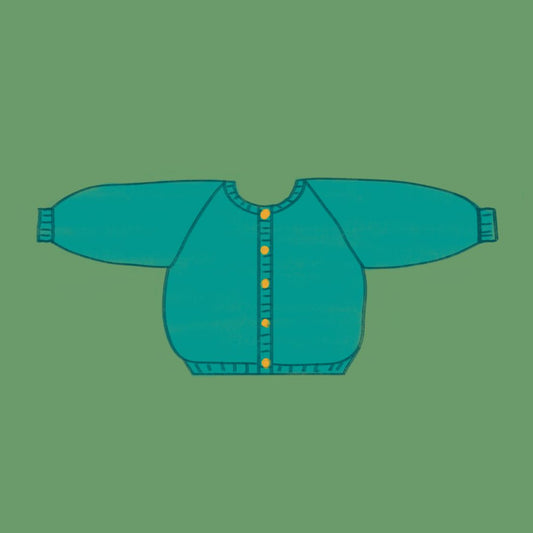
▪️ Cardichou (The Cabbage Vest) : its simple, top-down raglan silhouette showcases beautiful, responsibly sourced wool. → See the boss
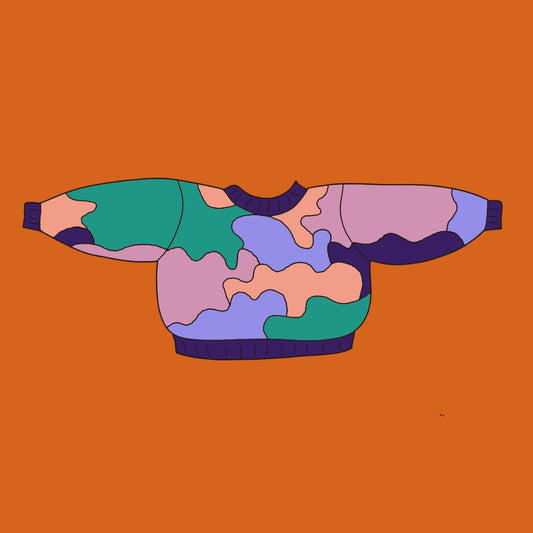
▪️ Festi : a very accessible circular cardigan, ideal for testing a soft and durable yarn in an easy-to-wear format. → See the boss
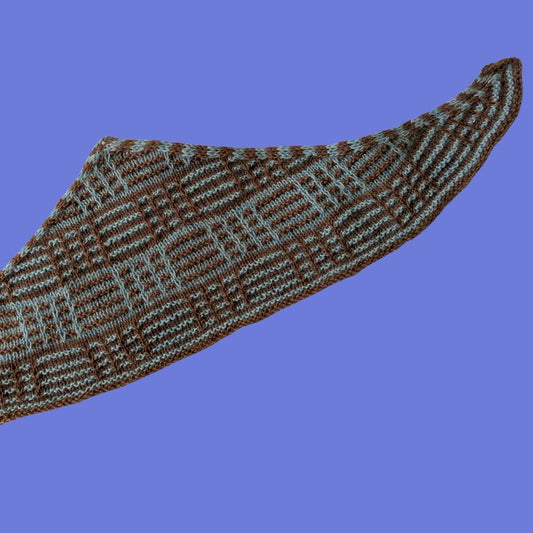
▪️ Marguerite : with its romantic openwork stitches, it's an excellent pattern for lightweight and sustainable plant-based yarns. → See the boss
These patterns are perfectly compatible with sustainable yarns, you'll really feel the difference in use.
Common pitfalls & misconceptions
“All organic wools are sustainable.”
No, some organic fibers may have been treated with undesirable products after spinning. The entire supply chain must be inspected.
"Recycled yarn is always eco-friendly."
If the recycled fiber contains a lot of synthetic material, this can limit future recycling, generate microfiber, or result in a loss of quality.
"A high price is synonymous with guaranteed ethics."
Not always. A brand can engage in "greenwashing" (misleading labeling). Demand transparency, labels, and reports.
How to get started with sustainable yarns: step by step
1️⃣ Choose a simple model (e.g. Cardichou, Festi) to limit the risks.
2️⃣ Read the technical data sheet of the yarn: composition, labels, origin.
3️⃣ Order a small quantity to test the sample (10 × 10 cm).
4️⃣ Knit, block, test: check the fit.
5️⃣ Adjust the ball size taking into account the additional cost and margin.
🔄 Each project is an opportunity to learn and refine your yarn choices.
Conclusion
Knitting ethically is not about being perfect, it's about making conscious decisions, valuing artisans, beautiful and respectful fibers, and wearing your creations with pride.
We firmly believe that the future of knitting (and the world) lies in gentler practices; every sustainable stitch counts. Even so, the responsibility of large corporations and politicians remains greater than any individual action.
The goal is not to make anyone feel guilty, but to see how we can each do a little better on our own scale, keeping in mind that the bulk of the change will come from global actions.
👉 To go further, I invite you to also discover 2 YouTube channels that I recently discovered and really like:
▪️ Lucy Yang
👉 To start off gently, take a look at our Knit-sis collection (cardigans, sweaters, tops)


