




Mastering short rows for curved shapes and ruffles: the Knit-sis' simple & modern guide
Knit SisShare
Introduction: When short rows finally become easy ✨
You dream of pretty rounded shapes, elegant peplums, flowing ruffles or perfectly sculpted necklines… but short rows scare you a little?
Let me reassure you right away: we panicked the first time too. Lenny even left a sweater at Grandma's for three months because "that thing that turns around in the middle of the row" was too much for her 😅.
Today, after more than 20 years of family knitting , dozens of prototypes and a good dose of laughter (thanks to the asymmetrical ruffles), we are sharing with you our clear, modern and accessible method .
👉 In this article, you will learn how to:
▪️ truly understand the purpose of short rows
▪️ Choose the right technique (wrap & turn, German short rows, Japanese…)
▪️ to achieve soft curved shapes, crisp ruffles, and sculpted shoulders
▪️ Avoid holes and demarcations
▪️ Use short rows in your projects, from sweaters to cardigans
And we've added links to our patterns that use this technique, to inspire you and help you knit without stress 🧶💛
⭐ Understanding short rows: the basics (simple, I promise)
Short rows are used to add volume or create a circular shape over a specific area of the knitting, without knitting the entire width of the row.
This is what creates:
▪️ a neckline that naturally lifts
▪️ better-fitting shoulders
▪️ ruffles , basques , hip curves
▪️ organic shapes in intarsia or jacquard
🎯 Key points to remember
Short rows = micro-turns in your knitting to create longer or shorter areas → therefore curves.
⭐ The three most useful short row techniques (and which one to choose)
We summarize for you the three methods we use most in our patterns — tested, approved, validated by Grandma.
1. The “Wrap & Turn” (W&T): the classic method
Historical technique: effective, clean, but requires unwinding the rolled-up section at the end.
Benefits :
▪️ precision
▪️ Ideal for structured shapes
Less fun:
▪️ can leave a micro-hole if not lifted properly
✨ Used in some Knit-sis ruffle prototypes before 2023.
2. The “German Short Rows”: our favorite ❤️
You knit → you turn → you pull the yarn → a double stitch is formed → magic.
Simple, clean, extremely fluid.
Why we love it:
▪️ invisible result
▪️ Perfect for beginners
▪️ Ideal for necklines, shoulders and soft curves
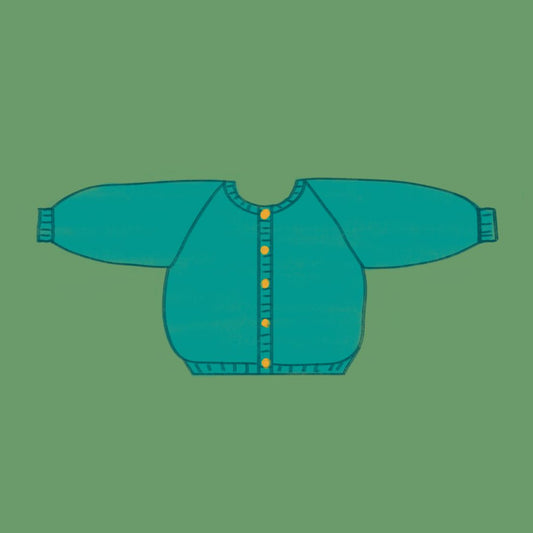
👉 This is notably the technique we use for modern top-down projects like Cardichou .
Discover the pattern ➜ Cardichou (The Cabbage Vest)
3. The “Japanese Short Rows”: the cleanest, but the most technical
You use a marker to trap the loop and then lift it.
Ultra-sharp result , perfect for lace.
But… not our number 1 recommendation for beginners 😉
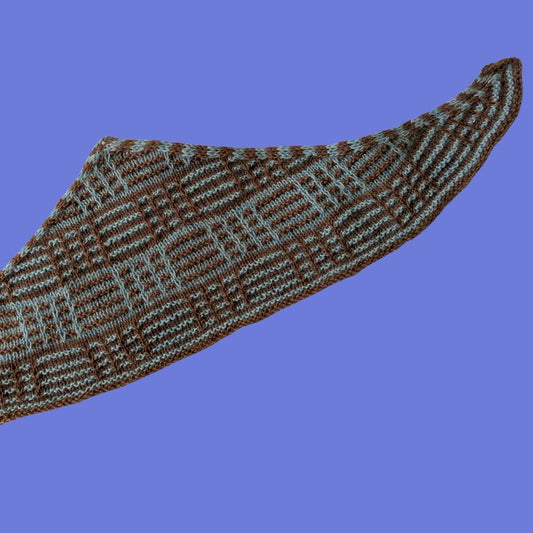
✨ Ideal for a refined model like Aude , our feminine lace vest.
See the pattern ➜ Aude
🎯 Key points to remember
▪️ Beginner → German Short Rows
▪️ Steering wheels → Wrap & Turn
▪️ Demanding lace → Japanese
⭐ Master short rows to create curved shapes (neckline, shoulders, rounded edges)
Shorter rows are key to avoiding the “neckline rising into the throat” effect.
By adding fabric at the nape of the neck, you get a knit that hangs naturally well .
A simple example: the sculpted U-shaped neckline
1️⃣ Knit a first short area
2️⃣ Turn before the end → shortened row
3️⃣ Knit a little further
4️⃣ Turn
5️⃣ Continue by expanding each section
→ Result: a progressive curve.
Where does that change everything?
▪️ front and back neckline
▪️ sloping shoulders
▪️ rounded bottoms (swan hem type)
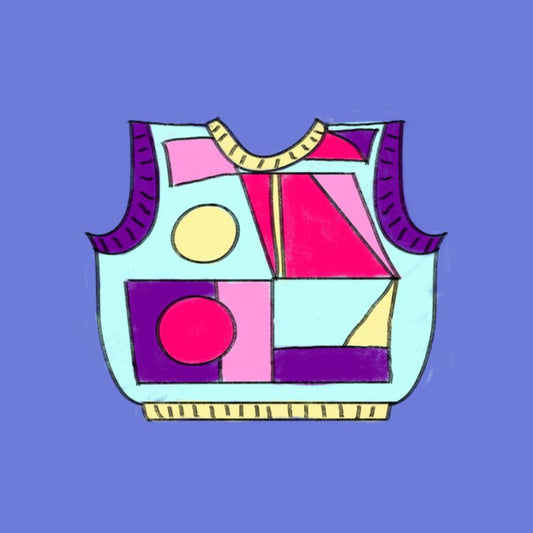
✨ The Festi vest , knitted in the round and ultra-accessible, benefits from a construction designed for an impeccable drape.
Discover the pattern ➜ Festi
⭐ Create beautiful ruffles using short rows (no holes!)
The shuttlecocks rely on an alternation of longer and shorter zones .
👉 A successful steering wheel =
▪️ invisible demarcation
▪️ smooth rounded
▪️ harmoniously distributed volume
The Knit-sis method (German short rows)
1️⃣ Mount the steering wheel rim
2️⃣ Knit the first short section
3️⃣ Form the double stitch
4️⃣ Return
5️⃣ Gradually enlarge the area
6️⃣ Continue until you reach the width of the steering wheel
💡 Personal tip:
Louise puts a small marker at the beginning of the steering wheel "so as not to get carried away and go too far in the curve" (yes, it happened to her once on a chick yellow prototype 🌼).
⭐ The most common mistakes (and how to avoid them)
❌ 1. Uneven tension → visible holes
➡️ Solution: maintain the same tension in the double stitch, without pulling too hard.
❌ 2. Turning too soon
➡️ Solution: mark the pivot points (mini markers or marks on paper).
❌ 3. Picking up the double stitch incorrectly
➡️ Solution: pick up the two strands as a single stitch.
❌ 4. Adding too few rows
➡️ Result: curve too steep or steering wheel “broken”.
➡️ Solution: lengthen the progression.
🎯 Key points to remember
Most of the problems stem from… tension .
Breathe, relax your shoulders, have a cup of tea ☕ and start again. It works.
⭐ Examples of Knit-sis patterns that use or work very well with short rows
Cardichou (top-down soft, ideal for beginners)
→ Perfect for understanding the impact on the fall.
Aude (fine lace, delicate shapes)
→ Ideal for progressing towards an ultra-clean finish.
Festi (modern vest, intuitive construction)
→ Perfect for understanding upper body fit.
⭐ BONUS: Keep this handy 🧾
Here is your special cheat sheet for short rows , to save or print.
MEMO SHEET – Short rows (German Short Rows)
▪️ Turn → stitch at the beginning → pull → double stitch
▪️ Knit to the next marker
▪️ Start over
▪️ Pick up the double stitch as a single stitch
⭐ Conclusion: You have now mastered the most magical knitting technique ✨
The shortened rows are no longer a mystery:
▪️ You know what they're for
▪️ You know the three main techniques
▪️ You know how to avoid holes
▪️ You can create ruffles, curves, sculpted shoulders…
And most importantly: you can use them in all your modern projects 🧶
👉 To put this into practice immediately, explore:
▪️ Cardichou , our soft and affordable vest
▪️ Festi , a modern vest with a fluid construction
▪️ Aude , our elegant lace model
And if you want to receive our next tutorials, tips and exclusive templates:
👉 Sign up for the Knit-sis newsletter (welcome gift 🎁).
Ready to take your knitting to the next level? Let's knit together! 🧡


