






Perfect finishes for edges, collars and cuffs: our simple techniques for flawless knitting ✨
Knit SisShare
Introduction
If you're like us, you've probably already finished a sweater and thought to yourself: "Darn... why is my hem curling? Why is my collar gaping? Why aren't my cuffs nice and neat?" 😅
Good news: achieving perfect finishes for borders, collars and cuffs is neither magic nor reserved for experts. It's a matter of a few steps, a little technique… and two or three tips that our grandmother drilled into us for years (“A piece of work deserves respect right down to the last stitch!”).
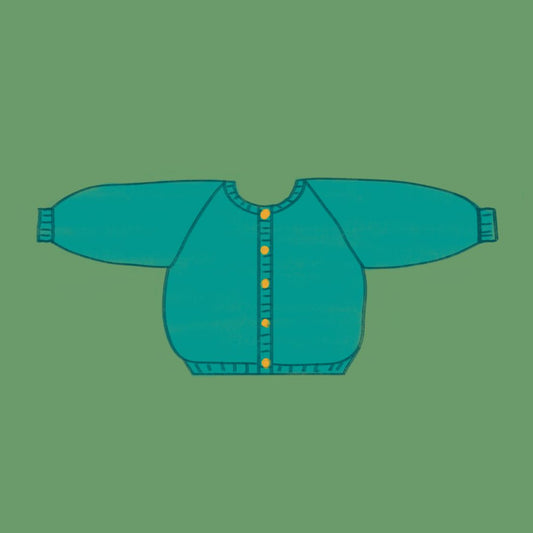
Today, we're sharing our Knit-sis method with you , tested on dozens of models: striped sweaters like Strippie , fluffy vests like Cardichou , or even openwork models like Marguerite .
The goal: for you to be 100% proud of your work… and for people to ask you: “Wait, where did you buy it?” 😏💛
The basics of a truly perfect finish (and why it makes all the difference)
Controlled elasticity
To prevent a gaping collar, an overly tight hem, or a misshapen cuff, tension and elasticity must be controlled :
▪️ Use the correct needle size
▪️ Adapt your setup/folding
▪️ Understanding the memory of the chosen thread
💡 Louise's tip : if you're knitting with a yarn that has a lot of bounce (like merino), never tighten your ribbing . The yarn will shrink when blocked and you'll get a "tourniquet" effect.
If you want a perfect example: look at the finishes of the Festi vest , always super sharp in photos.
The regularity of the stitches
The finishing touches are the most visible areas:
➡️ wrists
➡️ borders
➡️ neckline
A small irregularity is immediately noticeable.
The solution? A few simple techniques, which we detail below.
(Key takeaway: perfect finishes come from a combination of technique + good preparation + good choice of method)
The best techniques for clean and durable edges
The “anti-rolling” rib method
If your edges tend to curl, here's our magic combo:
▪️ Use at least 8 rows of ribbing
▪️ Choose a 1/1 rib if you want more elasticity
▪️ Knit the border with 0.5 mm smaller needles
▪️ Securely flat once finished
This is the technique we systematically use on our models like Vintage Fall or Twist & Shout . It's simple, effective, and long-lasting.
Elastic binding (Italian Bind-Off)
This feeder service is a MUST if you want:
▪️ comfortable wrists
▪️ a collar that won't strangle you
▪️ a finish that remains soft after washing
It is perfect for the Doudou sweater (free) because it allows maximum comfort.
(Remember: if your finish lacks elasticity, change your folding, not your edging)
Perfectly fitting mountain passes: techniques and assembly choices
Choosing the right assembly
Tubular assembly:
➡️ for modern sweater collars
➡️ ultra clean
➡️ very gentle on the skin
Long-tail mount:
➡️ Ideal for vest necklines
➡️ easy to master
➡️ just the right amount of stretch
This is our go-to for Cardichou , as it gives a soft collar that goes well with the casual style of the model.
Pick-up perfect (picking up stitches neatly)
This is THE point where many knitters have doubts, so here is our golden rule:
Pick up 3 stitches for every 4 rows
→ This avoids puckering, waves and areas that are too tight.
(Key point: a perfect collar = good ratio + regular lifting + good felling)
How to get clean, even and comfortable wrists
The invisible transition between jersey and ribbing
The “little staircase” between jersey and ribbing comes:
➡️ of a different voltage
➡️ from a sudden needle change
Our Knit-sis technique:
1️⃣ Knit the first row of ribbing with the thinner needle , but without stretching.
2️⃣ On the second row, pull the yarn slightly on the first stitches to even out the tension.
3️⃣ After 6 rows, check the symmetry.
🎉 Result: neat, even, Instagrammable wrists.
When to use a classic bind-off and when to use an elastic bind-off?
In summary:
▪️ Cuffs ➝ elastic
▪️ Sweater bottom ➝ classic if you want it to stay in place
▪️ Collar ➝ elastic or tubular for comfort
(Remember: adapt your pruning technique to the area, not to your usual practice)
Examples on Knit-sis models
Here are some examples where these techniques shine:
Cardichou (soft, easy vest)
➡️ Perfect for practicing a neck without unwanted tension.
➡️ clean and simple borders
👉 See the boss
Strippie (round sweater)
➡️ Ideal for practicing regular lifting
➡️ Super clean wrists thanks to the thin ribs
👉 See the boss
Marguerite (openwork vest)
➡️ Perfect ribbed edges to prevent rolling
➡️ tricky collar to master
👉 See the boss
Conclusion: You deserve a work as beautiful as the time you put into it 💛
The finishing touches are really the detail that changes everything: the sweater takes on a professional look, the vest hangs better, and you wear your creation with XXL pride.
If you want to practice these techniques in a motivating project, we advise you to start by:
👉 Cardichou for an easy collar
👉 Strippie for perfect edges
👉 Marguerite for working on openwork finishes
Or explore our collection of modern and affordable models directly :
✨ https://knit-sis.com/collections/patrons-de-tricot ✨
And if you want to receive our exclusive tips and surprise templates…
👉 Sign up for the Knit-sis newsletter (we promise, only good knitting content 💛).


