





Create seamless, integrated pockets: the simple & clean method (even if you've never done it before!) 🧵✨
Knit SisShare
You want to add invisible , neat pockets , integrated directly into your knitwear… but you're wondering how to avoid the "bulge" effect, the gaping hole or the overly visible seam?
Take a breath, make your tea ☕️: we're going to show you exactly how to do it with our technique tested on dozens of prototypes, including some of our flagship models.
We're Lenny & Louise, the two sisters behind Knit-sis, and if we confess something… the first pocket we knitted looked more like a potato sack than a pocket. 😅
But that was before our grandmother passed on her magic technique for achieving a clean, integrated, zero-seam finish.
Today, we're sharing his method with you, improved and modernized ❤️
Why choose integrated (and not sewn-on) pockets?
The built-in pockets are ideal if you want to:
▪️ A professional finish , like in premium models
▪️ A durable pocket that doesn't pull on the knit fabric
▪️ a clean, seamless appearance
▪️ a “wow” experience when you wear your vest or sweater
▪️ a lasting result even after years
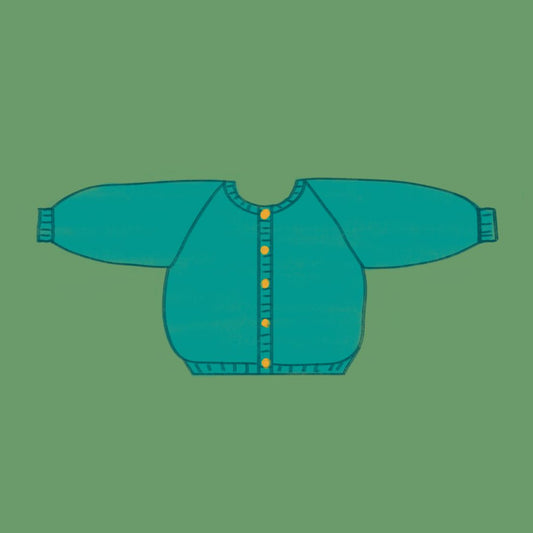
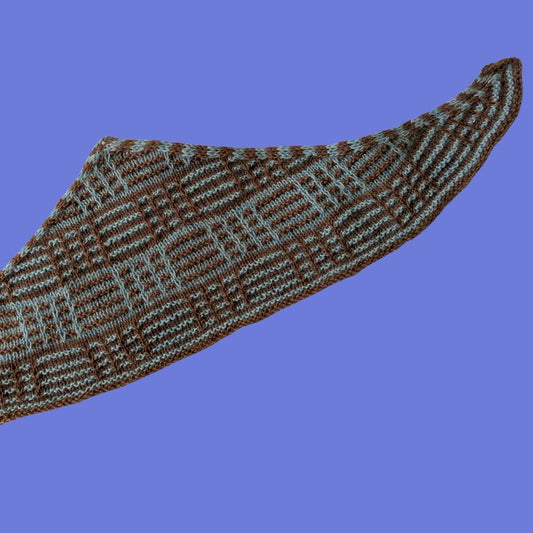
We regularly use this technique in our creations — particularly on modern and textured vests like Cardichou (soft + perfect for starting pockets), or on more graphic models like Elmer .
👉 If you want an affordable model to test your first integrated pocket, Cardichou is our #1 recommendation!
👉 See the Cardichou pattern (Cabbage Vest)
How to create integrated pockets without visible seams: the Knit-sis method
Here is our simplified and “zero stress” version for knitting an integrated pocket directly into your project.
1. Define the height of the pocket
The pocket should fall naturally under the hand, without distorting the knit.
📌 Universal guideline: between 10 and 14 cm below the armhole for a vest or sweater.
Lou's tip:
“Always do a test with your favorite garment: look where your hands naturally rest, it’s the best guide.”
Key takeaway: the important thing is not the exact height, but the consistency with your model and your body type.
2. Put the stitches of the future opening on hold
At the chosen rank:
▪️ knits to the intended location,
▪️ Place the opening stitches on hold (often between 18 and 28 stitches depending on the size),
▪️ replace them with the same number of stitches set up temporarily (backward loop or cable cast-on method recommended).
🎯 Objective: to create a “false continuity” to continue your knitting while the pocket is being constructed underneath.
Key point: this assembly should be firm but not tight, otherwise the pocket will pull.
3. Knit the pocket lining
On the stitches put on hold, you will knit a rectangle (usually in stockinette stitch), which will serve as the inside of the pocket.
Knit-sis tip:
🧶 Choose a fine wool for the pocket lining if your pattern is thick.
You'll avoid the "bubble" effect and the pocket will be more comfortable.
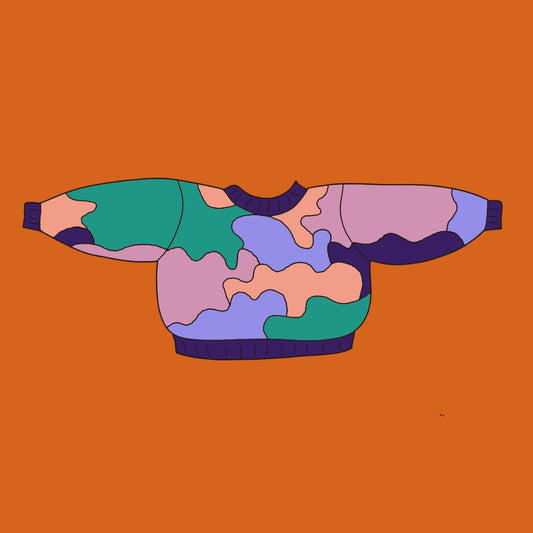
💡 That's exactly what we do on our intarsia models like Splashie , where the inside needs to stay thin and clean.
4. Assemble the pocket… without sewing
The magic happens here ✨
Once the background is finished, you have two options:
Option 1 — The neatest: join the stitches like a lining
At the end of the knitting body, you bring the stitches of the pocket bottom closer to the stitches cast on above and knit them together.
Result :
▪️ No visible seams
▪️ no unnecessary thickness
▪️ Integrated pocket clean clean clean
Option 2 — The quick way: sew at the end, but from the inside
You sew the pocket lining to the inside, strictly following the stitches.
If you respect each stitch → completely invisible seam.
Key takeaway: for a premium result, option 1 remains the best.
Common mistakes (and how to avoid them)
Because yes, we've all been there 😅
❌ A pocket that's too heavy
→ Use a finer wool for the inside or decrease the depth by 1–2 cm.
❌ A gaping opening
→ Set up the temporary mesh using cable cast-on , which is more stable.
❌ A pocket that is too short or too deep
→ Test the height with your hand BEFORE closing it permanently: the pocket should accommodate at least 2/3 of your palm.
❌ A visible pocket under the knitwear
→ Avoid contrasting colors.
→ On our coloured models like Strippie , we opt for the same colour or a slightly lighter shade.
A tip inherited from our Grandma ❤️
“A beautiful pocket is like a good secret: it should be forgotten.”
Some perfect models for adding pockets
Want to try it right away? Here are our 3 personal recommendations:
▪️ Cardichou : perfect for learning, ideal for beginners
▪️ Elmer Textured, modern, fun — the pockets are super stylish
▪️ Vintage Fall : retro vibe, perfect for integrated pockets
👉 Discover the entire Knit-sis vest collection
Conclusion: You're ready to create your first built-in pockets 🧶💪
Adding an integrated pocket is one of the best "level up" features in a knitting project.
With a little technique — and a lot of gentleness — you can transform a simple vest into a professional piece.
And if you want a perfect project to test this out right now…
👉 We recommend Cardichou, our favorite vest, easy, soft, ideal for progressing ❤️
Or explore the complete collection of vests to find the one that will make your little knitting heart beat faster.
We send you our love and can't wait to see your perfect pockets!
Lenny & Louise ✨


