






Mixing fancy stitches: the Knit-sis practical guide
Knit SisShare
If you dream of creating unique, textured, characterful pieces, but don't know how to combine several fancy stitches without risking a "failed patchwork" effect, you've come to the right place 💛
We are Lenny and Louise — the Knit-sis — and today we are sharing our family method , passed down from our grandmother: a simple, logical and fluid way to combine fancy stitches… without distortion, without surprises, and with a harmonious result.
I promise, mixing patterns (openwork, cables, textured stitch, stripes, lace…) becomes a real creative game ✨
Why mix fancy stitches in the same project?
Mixing fancy stitches allows you to:
▪️ customize a template
▪️ create a high-end look
▪️ Play with textures
▪️ Avoid monotony when knitting large pieces
▪️ Reinterpret a pattern to suit your taste
At Knit-sis, we often use this approach for our modern sweaters and cardigans: a small visual twist, and the piece takes on a soul.
🧡 Example:
In Twist & Shout , we play with retro twists. In Marguerite , the openwork creates a romantic lace effect. And some designs – like Strippie or Splashie – show how mixing patterns and colors transforms everything.
The 4 golden rules before mixing fancy stitches
1) Always check the point density
Each point has a different height and width .
If you combine a tight stitch and a very stretchy stitch, the tension changes… and the work puckers.
🧵 Tip: Knit 2 mini swatches (10 x 10 cm) and compare them.
2) Choose a visual approach
A harmonious work always follows a direction:
▪️ vertical (panels, columns of dots)
▪️ horizontal (stripes)
▪️ distributed (regular alternations)
✨ The secret: a strong pattern + a subtle pattern .
Ex.: twists (strong) + jersey (discreet).
3) Plan for transition zones
When combining two points, the transition must be prepared:
▪️ a row of stockinette stitch
▪️ a reverse row to “place”
▪️ a few edge stitches
This small shock absorber prevents deformation.
4) Check the repetition of the patterns
Some repetitions naturally agree:
▪️ fancy stitch over 4 stitches + cable over 8 stitches
▪️ Lace over 10 stitches + textured stitch over 20 stitches
🎯 The idea: find the smallest common multiple so that everything fits together.
How to mix fancy stitches without distortion?
Compatibilities between points
Here are the combinations that are guaranteed to work:
▪️ Jersey + cables (super stable)
▪️ Garter stitch + lace (good durability)
▪️ Textured stitch + jersey (perfect balance)
▪️ Openwork + simple fancy stitch
And the more delicate ones:
▪️ Ribbed fabric + very stretchy lace (risk of rippling)
▪️ Jacquard + openwork (too much visual information)
▪️ Brioche stitch + twists (excessive thickness)
Adjust the stitches as needed
Sometimes, you need to add or remove a few stitches between two sections.
Example :
If your lace stitch widens your work, you can decrease 2–4 stitches before switching to a tight stitch.
📌 Key takeaway:
It's better to adjust 2 stitches than to undo a whole section.
Where should fancy stitches be placed in a project?
Visual strategy (the “top-middle-bottom” rule)
▪️ Upper body: perfect for delicate cutouts
▪️ Middle: the highlights (cables, jacquard)
▪️ Hem and cuffs: textured stitching or updated ribbing
In our models:
▪️ Marguerite : central lace + simpler stitches on the sides
▪️ Twist & Shout : twists become the star
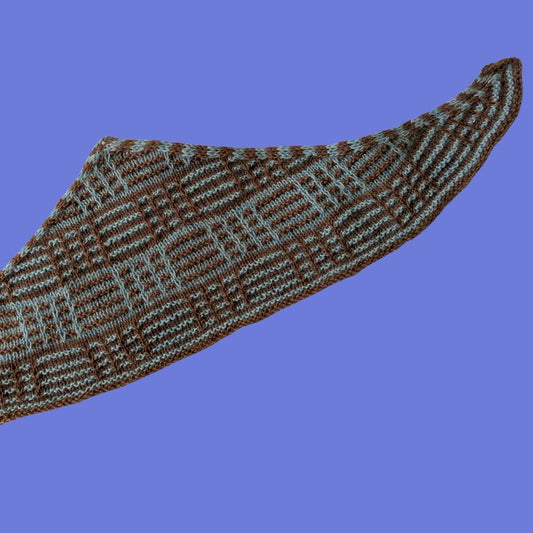
▪️ Elmer : two-tone basket point to create rhythm
Ready-made combination ideas (tested by us)
For a sweater
▪️ Openwork top + jersey bottom → light, feminine effect
▪️ Cable knit columns + jersey back → modern retro look
▪️ Stripes + simple texture → Strippie inspiration
For a vest
▪️ Textured sleeves + jersey body
▪️ Lace insert + plain rest
▪️ Vertical twists + contrasting buttons
For a top
▪️ Stripes + mini openwork ( Poppy effect )
▪️ Two-tone + subtle fancy stitch
Three inspiring Knit-sis patterns for mixing fancy stitches
🧡 Marguerite – romantic openwork vest
👉 Perfect for exploring lace and simple areas
Link here
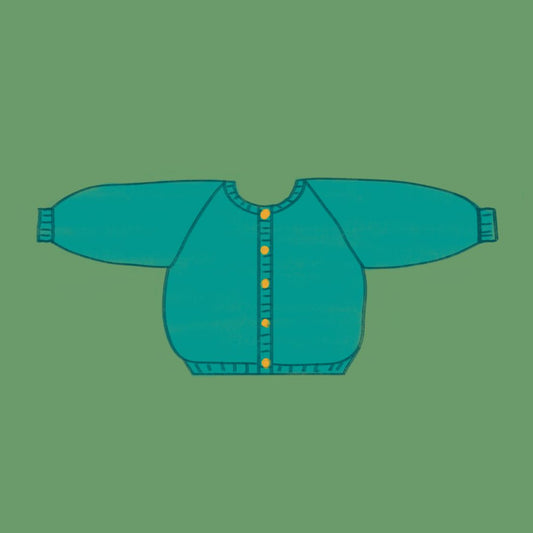
💛 Twist & Shout – retro twisted cardigan
👉 Ideal for learning how to structure a piece around a strong motif
Link here
💙 Strippie – cheerful striped sweater
👉 A perfect example of rhythmic patterns that are easy to incorporate
Link here
How to avoid the most common mistakes?
Here are the traps we ourselves fell into when we started out (thanks Grandma for her patience 😅):
▪️ Mix two very stretchy stitches
▪️ Forget the transition line
▪️ improvising without checking the rehearsals
▪️ alternating too many patterns at once
▪️ Choosing a thread that is too fuzzy for intricate lace
▪️ Add a strong pattern… in a multicolored yarn (too many features spoil the effect)
📌 Key takeaway:
A successful work is 30% creativity + 70% structure.
Conclusion: Your ultra-personalized work is yours!
Mixing fancy stitches requires a bit of method, but above all it's an incredible way to bring to life unique, creative pieces that are 100% you 💛
If you'd like to try this approach, our patterns are a great starting point — designed to be modular, accessible and fun to knit.
🎯 Ready to create a truly unique piece?
Discover our collection of modern designs:
👉 https://knit-sis.com/collections/tous-les-modeles
Or sign up for our newsletter to receive our exclusive tips & bonuses ✨


